
Manufacturing operations are more complex than ever, with every moving part—people, machinery, materials—under constant pressure to deliver quality and safety at scale. Traditional safety audits and manual monitoring struggle to keep up, especially as lines blur between man and machine. At Darsa AI, we’ve watched first-hand as real-time computer vision has transformed safety monitoring from a patchwork of reactive fixes into a proactive, 24×7 safety net. This technology is not about replacing human judgment—it’s about multiplying vigilance, catching what the human eye misses, and changing the arc of workplace safety in manufacturing for good.
Why Safety Remains a Mounting Challenge in Manufacturing
Despite advances in machinery and processes, injury rates in manufacturing remain unacceptably high. Common issues include:
- Non-compliance with Personal Protective Equipment (PPE)
- Employees entering hazardous zones unnoticed
- Manual errors in fast-paced or repetitive tasks
- Near-misses going unreported or uninvestigated
- Understaffed safety supervision, especially across multiple facilities
Relying solely on human supervision means critical safety events can slip through the cracks—simply due to fatigue, distraction, or lack of line of sight. That’s where computer vision steps in, not to replace, but to augment and amplify your team’s vigilance.
How Real-Time Computer Vision Works—and Why It Matters
Computer vision leverages advanced AI algorithms to interpret live video feeds from existing cameras installed across your plant. Instead of storing footage for later review, these algorithms analyze every frame in real time, looking for predefined hazards or compliance indicators:
- Detection of safety violations: If someone enters a restricted area, bypasses a barricade, or skips PPE, the system raises an alert instantly.
- Process monitoring: Algorithms can spot deviations from standard operating procedures, immediately identifying skipped steps or mishandled equipment.
- Behavioral analysis:The AI can spot unsafe acts (e.g., running in production areas, improper lifting), providing evidence for targeted coaching—before these actions result in harm.

Practical Ways Computer Vision Reduces Manufacturing Accidents
From our work with manufacturers, here’s how real-time computer vision systems like Darsa AI are actively reducing incident rates:
Proactive PPE Compliance Monitoring
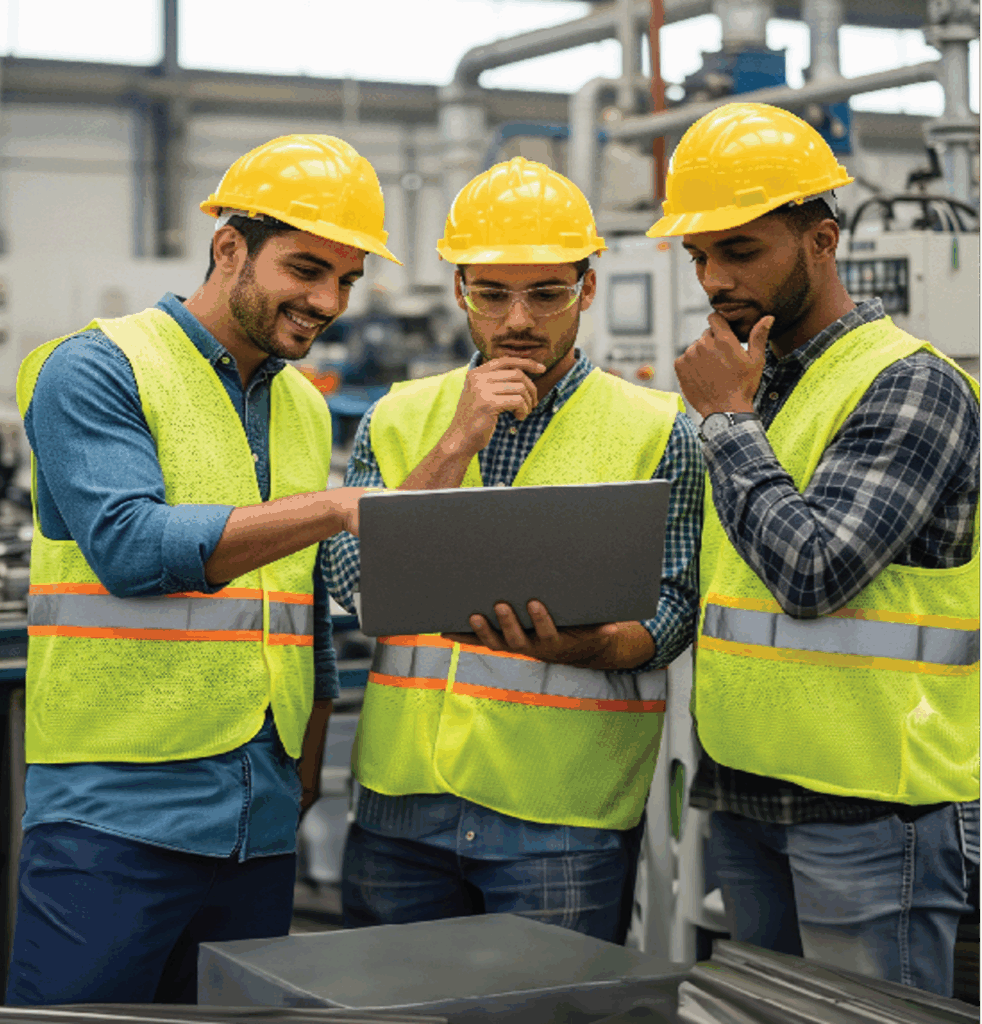
- Automated recognition of hard hats, high-visibility vests, boots, masks, and gloves at facility entry points and on the floor.
- Immediate alerts sent to supervisors if a worker is missing required PPE, including images and location data for rapid intervention.
- Centralized compliance reports to identify recurring gaps by shift, department, or location, facilitating smarter training and enforcement.
Zone Violations and No-Go Area Detection
- Real-time detection when a person enters a ‘no-go’ or hazardous area. This could include machine enclosures, chemical storage, or maintenance zones.
- Automated logging for every violation, enabling root cause analysis and trend spotting (e.g., shift-based patterns, process gaps).
Near-Miss and Unsafe Behavior Capture
- Identification of near-miss incidents: slipping, running, or unsafe crossing in high-traffic or forklift areas.
- Alerts and evidence for HSE leaders to intervene quickly, sometimes even before a formal incident ever occurs.
Equipment and Asset Presence Tracking
- Verification that safety equipment (e.g., fire extinguishers, first-aid kits) is present and unobstructed in required zones.
- Alerts if a critical safety asset is missing, relocated, or blocked, drastically reducing response time in emergencies.
Real-Time Escalation and Actionable Dashboards
- Immediate notifications to the supervisor or HSE leader—via email, WhatsApp, or broadcast—for critical safety violations or incidents.
- Rich dashboards combining live feeds, violation statistics, heatmaps, and compliance trends for granular oversight across all facilities.
Changing the Safety Culture: Continuous Improvement Powered by Data
Safety is not just about catching unsafe acts in real time—it’s about cultivating a resilient, learning-first culture. The continuous data stream from computer vision allows us to:
- Pinpoint departments, shifts, or machines with repeated violations, so we can tailor safety programs where they’re needed most.
- Shorten investigation cycles by providing timestamped, video-backed evidence of incidents and near-misses.
- Empower managers to coach teams with specific, objective examples—embedding a relentless improvement mindset.
- Reduce manual reporting burdens, freeing up supervisors to focus on meaningful field engagement and preventative action.
This is how incidents start trending downward—and how near-misses are transformed into learning opportunities, rather than ignored warning signs.
The Darsa AI Approach: Seamless Integration, Actionable Results
What sets our real-time computer vision approach apart?
- No new cameras required: Our system leverages your existing 2MP+ camera network—whether it’s dome CCTV, webcams, or even mobile devices.
- Runs on any hardware: No need for expensive servers or specialized appliances. Our algorithms are lightweight and can operate from desktops, laptops, tablets, or mobiles.
- Plug & play with your workflows: Darsa integrates with your HR, incident management, or payroll systems via open APIs. You get ready-to-use, compliance-grade data where you need it.
- Scales effortlessly: Whether you have 5 sites or 500, our centralized dashboard provides one-click oversight, real-time alerts, and data-driven insights company-wide.
Realistic Steps for HSE Leaders: Bringing Computer Vision On Board
If you’re tasked with safety for a manufacturing operation, here’s a proven roadmap for deploying computer vision:
- Start with a facility audit: Map your highest-risk zones, current camera coverage, and blind spots where incidents or near-misses occur most.
- Prioritize use cases: PPE compliance, restricted-area monitoring, and near-miss capture tend to yield the fastest improvements and ROI.
- Pilot, then iterate: Roll out a targeted pilot in a high-incident area, collect data for 30–90 days, and compare violation rates, response times, and incident counts with historical baselines.
- Measure outcomes: Track not just incident reduction, but time-to-alert, compliance trends, and frequency of unsafe acts detected.
- Scale and refine: Expand to additional sites and use cases, continuously refining alert thresholds, reporting formats, and integration with other HSE tools.
Key Takeaways: What Success Looks Like
- Fewer incidents, near-misses, and lost-time injuries—with small, sustainable changes snowballing into a step-change in safety culture.
- Immediate, objective alerts enable supervisors to act decisively, rather than piecing incidents together days later.
- Reduced manual monitoring burdens free up people to focus on coaching and prevention, not just compliance paperwork.
- Empowered data-driven leadership for HSE professionals, who can now justify investments, training, and process changes with hard evidence—not just gut feel.
Final Thoughts: The Human Factor, Supercharged
At its core, real-time computer vision isn’t about surveillance. It’s about care—making good on our promise to send every worker home safe, every day. By amplifying human judgment, closing gaps, and providing data for continuous improvement, computer vision gives safety professionals the tools to lead from the front.
Ready to see how your facility can set a new standard for safety? Learn more about how Darsa AI’s platform integrates seamlessly with your existing systems and starts working—instantly—to make every shift safer.